

Why Your Body Feels Slower Than It Used To — And What Many Women Are Starting to Realize

Many women begin to notice subtle changes in their body over time — lower energy, slower metabolism, and a feeling that their routine isn’t working the same way anymore. What if the answer isn’t about doing more, but understanding what’s happening internally?

4/4/20264 min read

There comes a point when things start to feel different in a way that’s hard to explain.
You’re still following your routine. Still trying to eat well, stay active, and take care of yourself the best you can.
But your body doesn’t seem to respond the same way it used to.
Energy feels inconsistent. Some days feel heavier than others. And even when you do everything “right,” the results don’t quite match the effort.
At first, it’s easy to blame your schedule.
A busy week. Not enough rest. Too many responsibilities.
But over time, that explanation starts to feel incomplete.
Because even when life slows down a little… your body doesn’t fully bounce back.
For many women, this creates a quiet sense of frustration.
Not something dramatic. Not something urgent.
Just a persistent feeling that something is slightly off — even if you can’t clearly point to what it is.
This is where things start to get interesting.
Because more attention has been given to how internal systems influence the way we feel on a daily basis.
One of those systems is the liver.
Often associated only with detoxification, the liver actually plays a much broader role in the body.
It helps process nutrients, supports metabolism, and works continuously to filter and manage what enters your system.
And unlike other systems, it works quietly.
You don’t necessarily feel when it’s under pressure.
But over time, that pressure can begin to show up in subtle ways.
A feeling of heaviness after meals. Lower energy levels throughout the day. A metabolism that feels slower than it used to.
Modern routines don’t always make things easier.
Highly processed foods, environmental exposure, daily stress — all of these factors can contribute to how much your body has to process behind the scenes.
And while the body is incredibly resilient, it isn’t immune to overload.
When the systems responsible for balance are constantly working at capacity, the effects don’t always appear as something obvious.
Instead, they show up gradually.
A shift in energy. A change in how your body responds. A growing sense that something internally isn’t as efficient as it once was.
This is why many women are starting to look at their health from a different perspective.
Not just focusing on what they do externally…
But considering what might be happening internally — and how that could be influencing everything else.
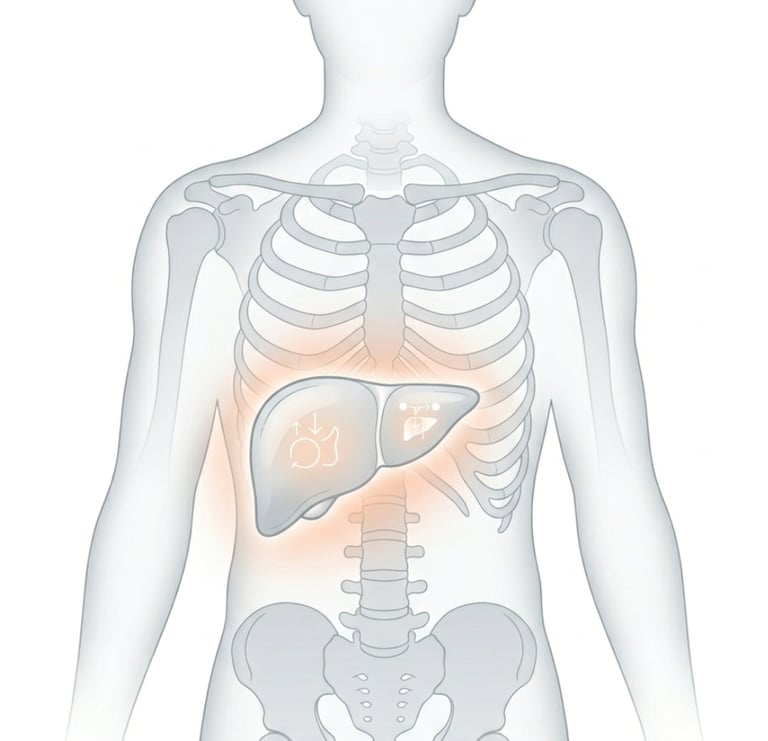
Looking Beyond the Surface: Understanding Internal Balance

Looking at the body more closely often reveals patterns that aren’t immediately obvious.
The liver, for example, plays a much deeper role than most people realize.
Beyond its basic functions, it helps regulate how the body processes energy, manages nutrients, and maintains internal balance.
When it’s working efficiently, these processes tend to feel natural and steady.
But when it becomes overloaded, the effects can begin to appear in subtle ways.
Not as something alarming — but as small, persistent changes.
A slower metabolism. Less consistent energy. A feeling that your body isn’t keeping up the way it once did.
This is why many women are starting to shift their focus.
Instead of pushing harder externally, they begin to consider how supporting internal functions may influence how they feel day to day.
Because sometimes, the difference isn’t in what you do…
But in how your body is able to respond.

What’s interesting is that this shift in perspective is becoming more common.

More women are beginning to understand that the way their body feels on the outside is often connected to what’s happening internally — especially in systems that don’t usually get much attention.
And the liver is one of them.
When it’s supported, the body tends to respond differently.
Energy feels more stable. Daily routines feel lighter. And the effort you put into your habits begins to feel more aligned with the results you experience.
But this isn’t something that’s always talked about openly.
Which is why many are now starting to explore this connection more deeply — looking for ways to better understand what might be influencing their energy, metabolism, and overall sense of balance.
And for those who have been feeling this shift, learning more about this internal connection can be an important next step.

Sources / References: Harvard Health Publishing. The liver and its role in metabolism. / Mayo Clinic. Liver function and overall health. / National Institutes of Health (NIH). Digestive and metabolic processes. / Cleveland Clinic. Metabolism and energy balance. / American Psychological Association. Stress and its impact on the body.

⚠️ Health & Product Disclaimer

The information provided on this page is for educational and informational purposes only and is not intended as medical advice.
While we may share insights about symptoms, supplements, and wellness products, this content should not be used as a substitute for professional medical guidance, diagnosis, or treatment.
If you are experiencing persistent symptoms or have concerns about your health, we strongly encourage you to consult a qualified healthcare professional before making any decisions.
Always speak with a healthcare provider before starting any new supplement, especially if you are pregnant, nursing, taking medication, or have an existing medical condition.
Individual needs can vary, and what works for one person may not be appropriate for another.