

Why You Still Feel Bloated — Even When You’re Doing Everything Right
Even when you’re eating well and trying to take care of your body, bloating can still show up in ways that feel confusing and frustrating. This article explores why digestion doesn’t always respond the way you expect, and how different types of support — from simple daily habits to more structured approaches — may help your body feel lighter, more balanced, and aligned again.
4/18/20266 min read



There’s a quiet kind of frustration that builds over time.
It doesn’t happen all at once. It starts subtly — a feeling after meals that something isn’t quite right. A slight heaviness. A sense that your body is holding onto something instead of processing it with ease.
At first, it feels temporary.
You tell yourself it’s just a phase. Maybe something you ate. Maybe just a long day.
So you begin to adjust.
You start choosing lighter foods. You pay more attention. You try to eat better, slower, more intentionally. You begin doing what most people would consider the “right things.”
And yet… the feeling doesn’t fully go away.
The bloating still shows up — sometimes stronger, sometimes more subtle, but present enough that you begin to notice a pattern.
That’s when it shifts from physical to emotional.
Because it’s no longer just about digestion.
It becomes a quiet question that stays in the background of your day:
“Why doesn’t my body feel the way it should?”
There’s a kind of disconnect that forms when your effort doesn’t match your results.
You’re trying. You’re paying attention. You’re making changes.
And still, your body feels slow, heavy, slightly out of sync.
Not in a dramatic way — but enough to make you feel like something isn’t fully aligned.
And that’s where most people get stuck.
Not because they’re doing something wrong…
But because they’re missing a piece of what’s actually happening inside.
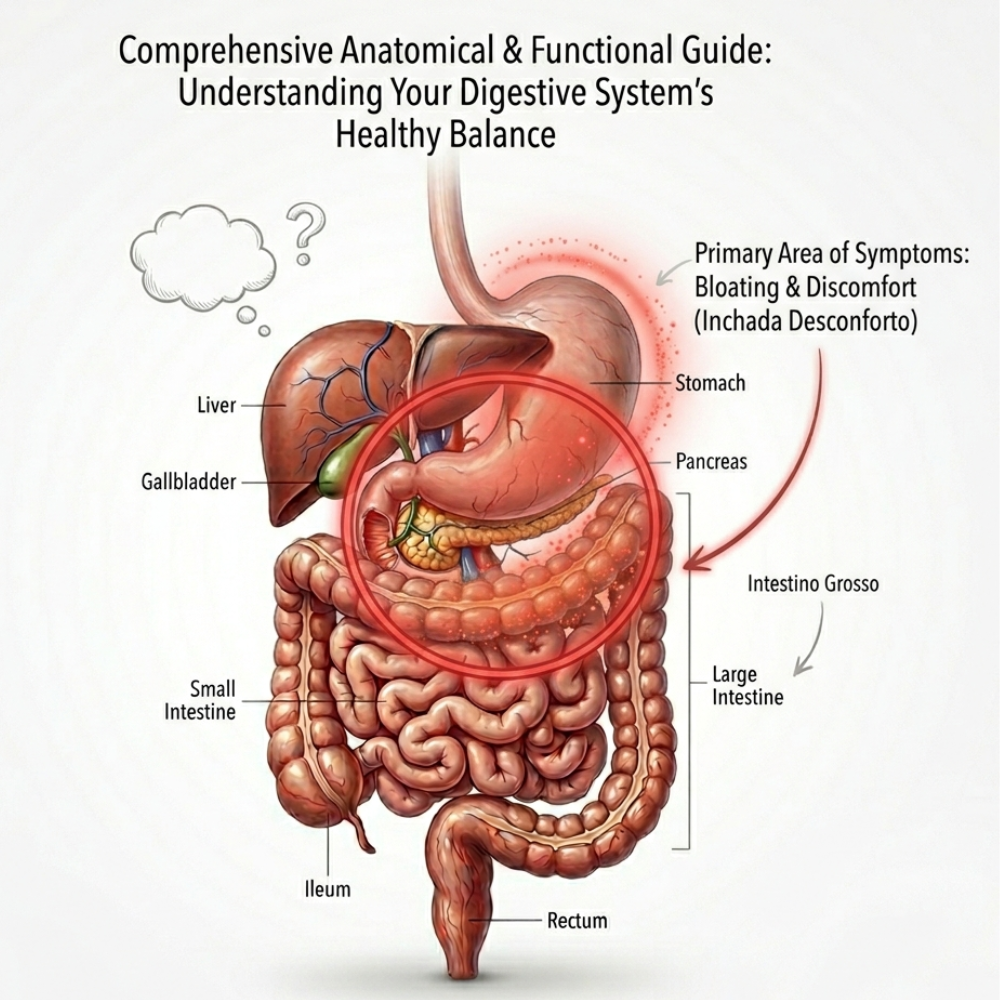
For many women, the first real shift doesn’t come from adding more — but from simplifying.
Before looking for complex solutions, it often starts with creating the right conditions for your body to function the way it’s designed to.
That can look surprisingly simple.
Slowing down during meals instead of eating in a rushed state.
Giving your body a few quiet minutes before and after eating.
Allowing your system to move gently — a short walk, a moment of pause.
Introducing calming elements like warm herbal teas, such as ginger or peppermint, that naturally support digestion.
These small actions don’t force change.
They signal safety.
And when your body feels safe, it tends to function differently.
Digestion becomes smoother.
Tension reduces.
Your system begins to respond instead of resist.
For some, these subtle adjustments are enough to shift how their body feels.
But for others — especially when discomfort has been present for a longer time — these steps become just the beginning.
Because sometimes, the body needs a more direct form of support.
Not as a quick fix, but as a way to assist what may not be working as efficiently as it could.
Because when your body needs a little more support, it’s often not about doing something extreme — it’s about being more intentional with how you support what’s already there.
And this is where many women begin to explore a slightly different approach.
Not abandoning the natural habits…
but complementing them.
Sources / References: Harvard Health Publishing. Gas and bloating: Causes and prevention. / Mayo Clinic. Belching, gas and bloating: Tips for reducing them. / National Institutes of Health (NIH). Digestive diseases and symptoms. / Cleveland Clinic. Bloating causes and treatment. / American Gastroenterological Association. Digestive health and gut function.
⚠️ Health & Product Disclaimer
The information provided on this page is for educational and informational purposes only and is not intended as medical advice.
While we may share insights about symptoms, supplements, and wellness products, this content should not be used as a substitute for professional medical guidance, diagnosis, or treatment.
If you are experiencing persistent symptoms or have concerns about your health, we strongly encourage you to consult a qualified healthcare professional before making any decisions.
Always speak with a healthcare provider before starting any new supplement, especially if you are pregnant, nursing, taking medication, or have an existing medical condition.
Individual needs can vary, and what works for one person may not be appropriate for another.
What’s often overlooked is that digestion is not just about what you eat — it’s about how your body processes what you give it.
And that process is far more complex than it seems.
When you eat, your body doesn’t simply “absorb” food. It needs to break it down, transform it, and move it through a series of internal steps that depend on different systems working together.
Digestive enzymes help break down proteins, fats, and carbohydrates into smaller components your body can actually use.
Your gut microbiome — the community of bacteria living inside you — plays a role in how food is fermented, how nutrients are absorbed, and even how gas is produced.
And beyond that, your nervous system quietly influences everything.
The pace at which you eat.
The state your body is in while eating.
Whether your system feels relaxed… or under pressure.
When these elements are in balance, digestion tends to feel almost invisible.
But when they’re slightly out of sync, the experience changes.
Food may take longer to break down.
Fermentation can increase in the gut.
Gas builds gradually.
And what you feel is that familiar expansion — the bloating that seems to come from nowhere.
This is why eating “healthy” doesn’t always lead to feeling better.
Because even the best foods can feel heavy if your body isn’t processing them efficiently.
And over time, this creates confusion.
You begin to question foods, routines, even your own body.
But in many cases, the issue isn’t the food itself.
It’s the internal environment that hasn’t been fully supported.
🍵 A Natural Place to Begin
For those who prefer to start gently, simple herbal support can go a long way.
Warm teas made with ingredients like ginger, peppermint, or fennel have been used for generations to help the body relax after meals, reduce gas buildup, and support a smoother digestive rhythm.
They don’t overwhelm your system.
They don’t force immediate change.
Instead, they create consistency — and over time, your body begins to respond to that.
If you’re looking for something easy to integrate into your routine, this can be one of the most accessible ways to begin supporting your digestion more intentionally.
👉 Explore simple tea recipes and daily habits here
As awareness grows, many people begin to notice that not all support works in the same way.
Some approaches focus on helping the body process food more effectively in the moment.
Others focus on restoring balance internally, over time.
And understanding this difference can change how you choose what to explore next.
🧠 Supporting How Your Body Breaks Down Food
At its core, digestion depends on your body’s ability to properly break down what you eat.
And when that process isn’t as efficient as it could be, even well-balanced meals can feel difficult to process.
This is where digestive enzymes come into the picture.
They support the breakdown of proteins, fats, and carbohydrates — helping your body process food more efficiently and reducing the likelihood of that heavy, bloated feeling after eating.
For many women, this becomes a practical next step.
Not because something is “wrong”…
but because their body benefits from a little extra support during digestion.
Two commonly explored options in this category include:
Enzymedica Digest Complete
But digestion isn’t only about breaking food down.
Over time, many people begin to realize that how they feel is also influenced by something deeper — the internal environment of the gut itself.