
The Hidden Impact of Stress and Anxiety in Women’s Daily Routines - PT3 - Taking Care of Yourself: Simple Steps to Manage Stress and Reclaim Your Balance
Managing stress and anxiety starts with small, intentional actions. Creating supportive habits and seeking the right help can make a meaningful difference in emotional well-being and daily life.
4/3/20263 min read

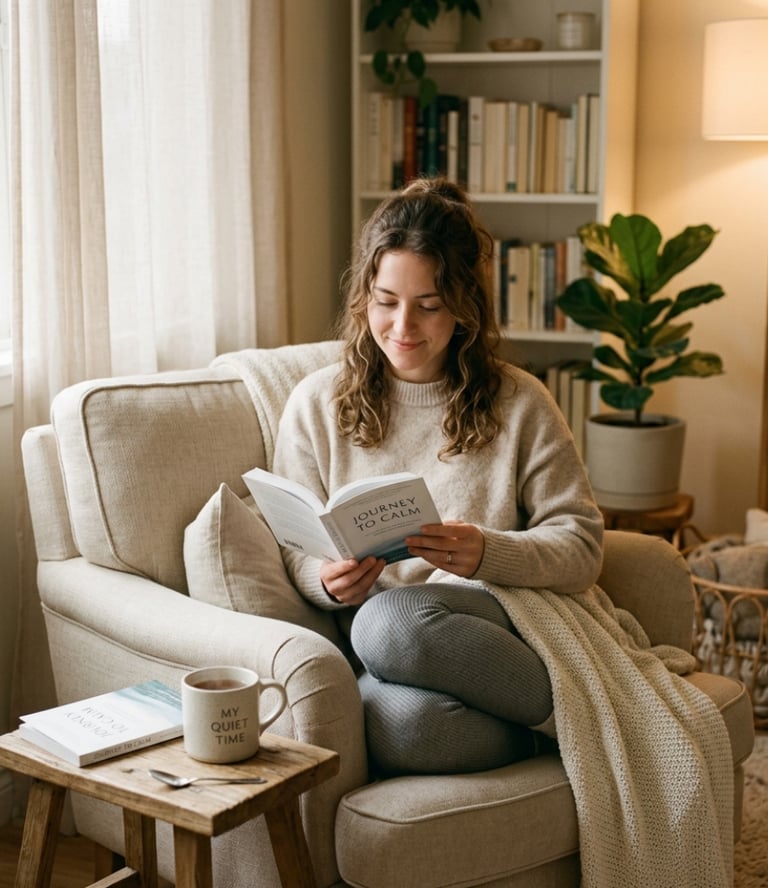
Once you begin to recognize the signs of stress and emotional exhaustion, the next step is not to change everything at once.
In fact, trying to fix everything immediately can create even more pressure. What truly makes a difference is starting small and building consistency over time.
Taking care of your well-being is less about doing more and more about creating space. Space to pause, to slow down, and to allow your mind and body to recover from constant stimulation.
In a routine that rarely stops, even a few minutes of intentional pause can begin to shift how you feel. Stepping away from screens, sitting in silence, or simply allowing yourself to breathe without rushing to the next task are small actions, but they send a powerful signal to your body.
They tell it that it is safe to relax.
Another important step is learning to recognize your limits. Many women carry responsibilities continuously without questioning how much they are holding. Over time, this creates a pattern where pushing through becomes the default.
But your energy is not unlimited.
Setting boundaries, even in small ways, helps protect that energy. It allows you to decide what truly needs your attention and what can be adjusted, delayed, or even released.
There is also a deeper layer to this process, and that is allowing yourself to seek support.
For many women, asking for help doesn’t come naturally. There is a sense that everything must be handled alone, that strength means continuing no matter what. But real strength often looks different.
It looks like recognizing when you need support.
Talking to someone, whether it’s a trusted person or a professional, creates space for clarity. It allows you to understand what you’re feeling without carrying it entirely on your own.
Professional guidance, in particular, offers tools and perspectives that can help you navigate stress and anxiety in a more structured and supportive way. It is not a last step — it is part of taking care of yourself.
And when you begin to approach your well-being with this level of awareness, something shifts.
You move through your days with more intention. Your reactions become less automatic. Your energy feels more stable.
Not because life became easier — but because you are no longer moving through it without support.
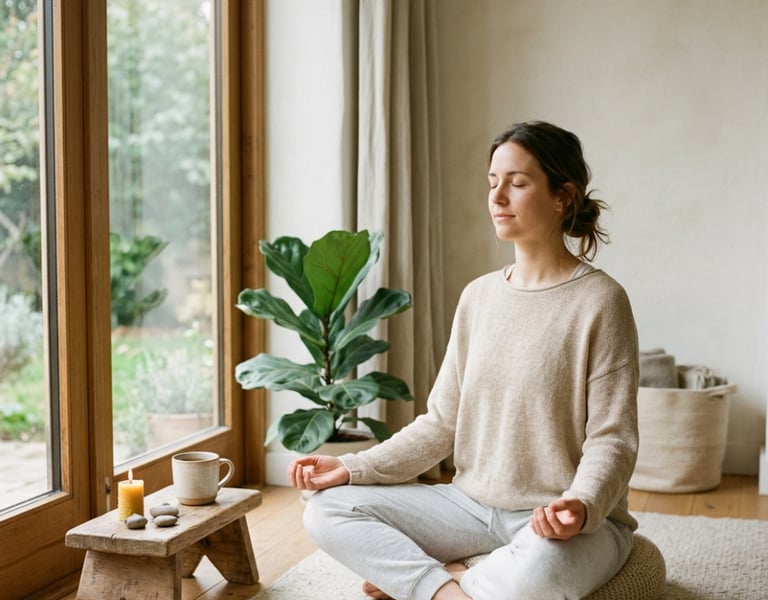
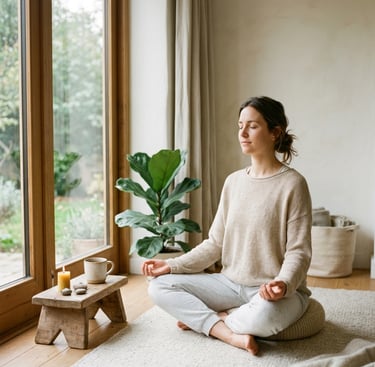
Taking care of yourself is built through small, consistent actions.
Self-care is often misunderstood as something complex or time-consuming, but in reality, it begins with simple and intentional choices throughout your day.
Creating small moments of pause, reducing overstimulation, and allowing yourself time to mentally reset can gradually reduce the intensity of stress. These actions support your nervous system and help your body return to a more balanced state.
When combined with professional support, if needed, these habits create a stronger foundation for long-term emotional well-being. The goal is not to eliminate stress completely, but to develop a way of responding to it that feels more stable, aware, and sustainable.
You don’t have to carry everything on your own.
Taking care of yourself is not something to postpone for when life slows down. It’s something to integrate into your routine, even in small ways.
When you begin to support your mind and body with intention, you start to feel more present, more balanced, and more in control of your energy.
And over time, that care becomes part of how you live — not something extra, but something essential.
Sources / References: Mayo Clinic. (2023). Stress management. / National Institute of Mental Health. (2024). Mental health care. / American Psychological Association. (2022). Coping with stress. / Harvard Health Publishing. (2022). Relaxation techniques. / CDC. (2023). Mental health resources.
Need Support? You’re Not Alone
If you’re feeling overwhelmed, anxious, or emotionally exhausted, reaching out for support can make a meaningful difference. You don’t have to go through it alone.
In the United States, you can access free and confidential support:
Call or text 988 — The Suicide & Crisis Lifeline (available 24/7)
Chat online: 988lifeline.org
If you’re in immediate danger, call 911
These services are free, confidential, and available to anyone who needs to talk.
Reaching out is not a sign of weakness — it’s a step toward taking care of yourself.