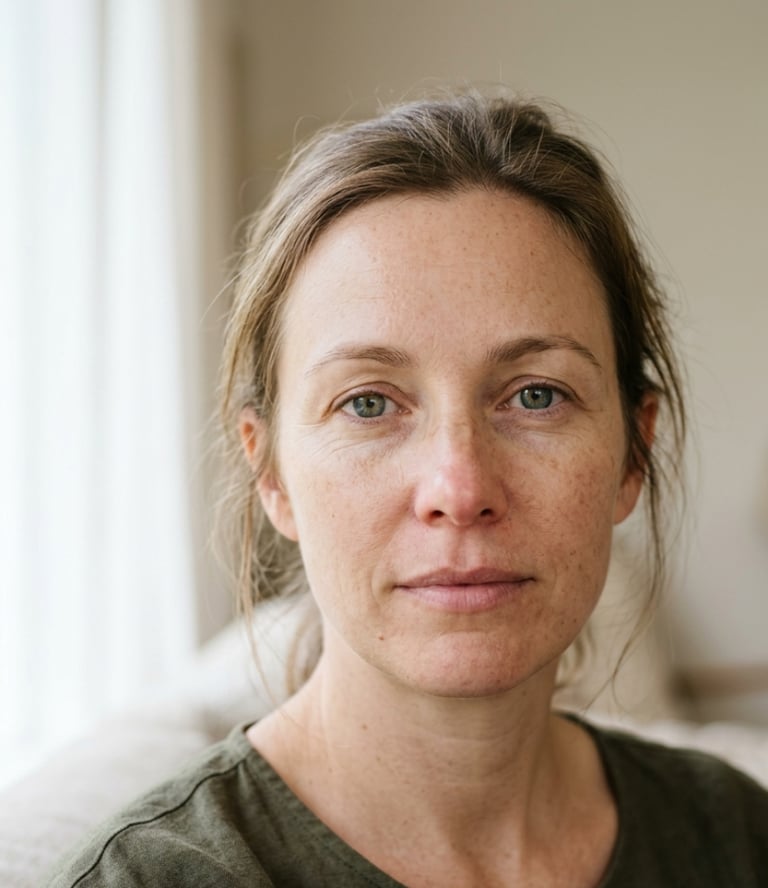
There are changes in the skin that feel easier to understand.
Dryness, for example, can often be felt immediately. Oiliness becomes visible throughout the day. But changes in skin tone tend to follow a different path. They don’t always announce themselves in a clear or immediate way. Instead, they develop slowly, almost quietly, until one day you begin to notice that something no longer looks the same.
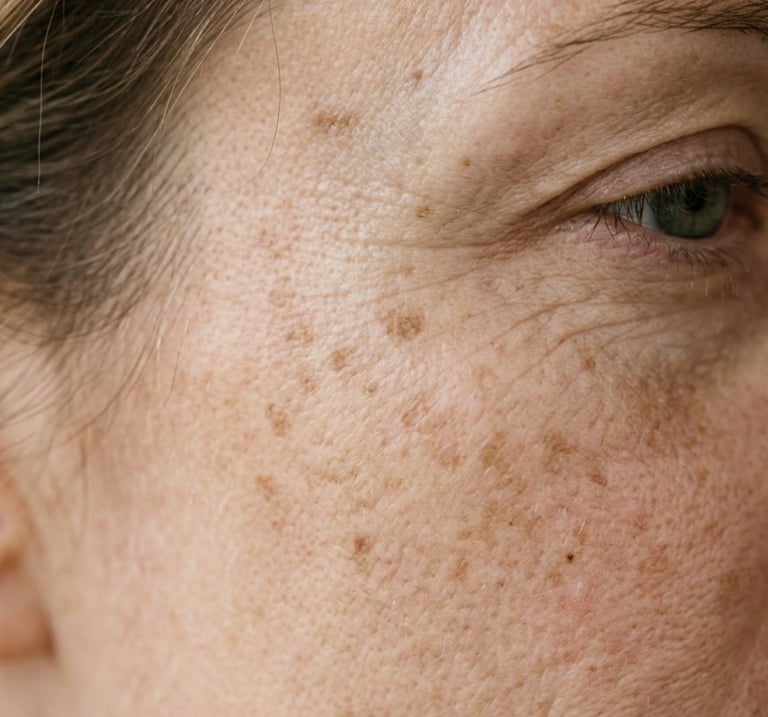
At first, it may be just a small variation. A slightly darker area, a subtle shift in tone, something that only becomes visible under certain lighting. It doesn’t feel significant enough to question. It blends into your normal routine, easy to overlook and even easier to dismiss.
But over time, that subtle difference becomes more consistent.
What once appeared occasionally begins to show up more often. The contrast becomes easier to see. And eventually, what felt like a small detail starts to feel like something that belongs there — something that has become part of your skin.
This is usually the moment when uncertainty begins.
Because unlike other changes, variations in skin tone don’t always come with a clear explanation. There isn’t always a single cause that you can point to, and that can make the experience feel confusing. Many people assume it must be something recent, something that suddenly triggered the change. But in reality, it is often the result of multiple factors interacting over time.
When changes in skin tone become more noticeable, the instinct is often to look for a single cause.
But in many cases, uneven tone is not the result of one isolated factor. It is shaped by a combination of influences that interact over time, including sun exposure, hormonal variations, inflammation, and the natural aging process.
Sun exposure is one of the most significant contributors, even when it doesn’t seem excessive. Over time, repeated exposure can lead to localized increases in pigmentation, especially in areas that are more frequently exposed. These changes don’t always appear immediately, but tend to develop gradually.
Hormonal fluctuations can also influence how the skin produces and distributes pigment. These shifts are often subtle, but they can affect the overall balance of tone, making certain areas appear darker or more uneven.
In addition to that, past skin responses — such as sensitivity, irritation, or inflammation — can leave behind traces that alter how the skin reflects light. These traces are not always dramatic, but they contribute to the overall perception of unevenness.
This is why a more supportive approach tends to be more effective than a reactive one. Protecting the skin from excessive sun exposure, maintaining a consistent routine, and avoiding unnecessary irritation can help reduce the accumulation of these effects over time.
These actions do not create immediate transformation.
But they help slow the process that leads to visible changes, allowing the skin to maintain a more stable and even appearance in the long term.
When your skin tone begins to change, it is rarely just about appearance.
It is often the result of a process that has been unfolding quietly — influenced by time, environment, and the way your skin has been adapting along the way.
And when you look at it from this perspective, something becomes clear.
The signs you see now are not isolated.
They are connected.
👉 Subtle dryness.
👉 Changes in oil balance.
👉 And now, visible differences in tone.
Each one part of the same story.
Not something that needs urgency — but something that deserves understanding.
Because when you begin to understand how these patterns connect, your approach naturally becomes more intentional, more consistent, and more aligned with what your skin actually needs over time.
If you want to explore this more deeply — and understand simple, natural ways to support your skin without overcomplicating the process — you can continue inside our library.
Visit ahcrotti.com and access a complete guide designed to help you see these changes with more clarity and direction.
Sources / References: American Academy of Dermatology / National Institutes of Health / Mayo Clinic / Cleveland Clinic / Harvard Health Publishing / Journal of Clinical and Aesthetic Dermatology / British Journal of Dermatology
⚠️ Health & Product Disclaimer
The information provided on this page is for educational and informational purposes only and is not intended as medical advice.
While we may share insights about symptoms, supplements, and wellness products, this content should not be used as a substitute for professional medical guidance, diagnosis, or treatment.
If you are experiencing persistent symptoms or have concerns about your health, we strongly encourage you to consult a qualified healthcare professional before making any decisions.
Always speak with a healthcare provider before starting any new supplement, especially if you are pregnant, nursing, taking medication, or have an existing medical condition.
Individual needs can vary, and what works for one person may not be appropriate for another.
Sun exposure is one of the most common influences, even when it doesn’t feel excessive. The skin remembers patterns of exposure, not just isolated moments. Small, repeated exposure — day after day — can gradually influence how pigment is distributed, especially in areas that receive more light.
Hormonal changes can also play a role, sometimes in ways that are not immediately obvious. These shifts don’t always create dramatic effects, but they can subtly influence how the skin produces and retains pigment, leading to areas that appear slightly darker or less even.
In addition to that, the skin can respond to past irritation or inflammation in ways that leave behind visible traces. These are not always severe reactions. In many cases, they are mild and temporary in the moment, but they can still influence how the skin looks afterward.
This is where the topic becomes more delicate.
Because not every change in skin tone follows the same pattern, and not every mark has the same origin. Some are temporary and tend to fade with time. Others may remain more stable and require a different level of attention. And in certain situations, changes in the skin can reflect something that goes beyond surface-level behavior.
That doesn’t mean something is necessarily wrong.
But it does mean that awareness matters.
Paying attention to how and when these changes appear, whether they are evolving, remaining stable, or becoming more noticeable over time, can help you better understand what your skin is expressing. The context in which a change appears is often just as important as the change itself.
What makes this even more complex is that these variations rarely exist in isolation.
They are often connected to other shifts that happened earlier. Subtle dryness that affected the skin’s resilience. Changes in oil balance that influenced how the skin protected itself. Small disruptions that, over time, made the skin more reactive to external factors like sunlight and environment.
And slowly, these layers begin to overlap.
What you see on the surface is not a single event, but a combination of processes that have been unfolding gradually. A reflection of how your skin has been adapting — and sometimes struggling to maintain balance — over time.
This is why quick explanations rarely feel complete.
Because the skin is not responding to just one thing. It is responding to patterns.
And once you begin to see it that way, something shifts in how you interpret those changes.
Instead of seeing them as isolated flaws, they begin to look more like signals. Not urgent, not something to react to immediately, but something worth understanding with a little more attention and patience.
Because in many cases, the goal is not to react quickly.
It is to understand clearly what has been happening all along.